
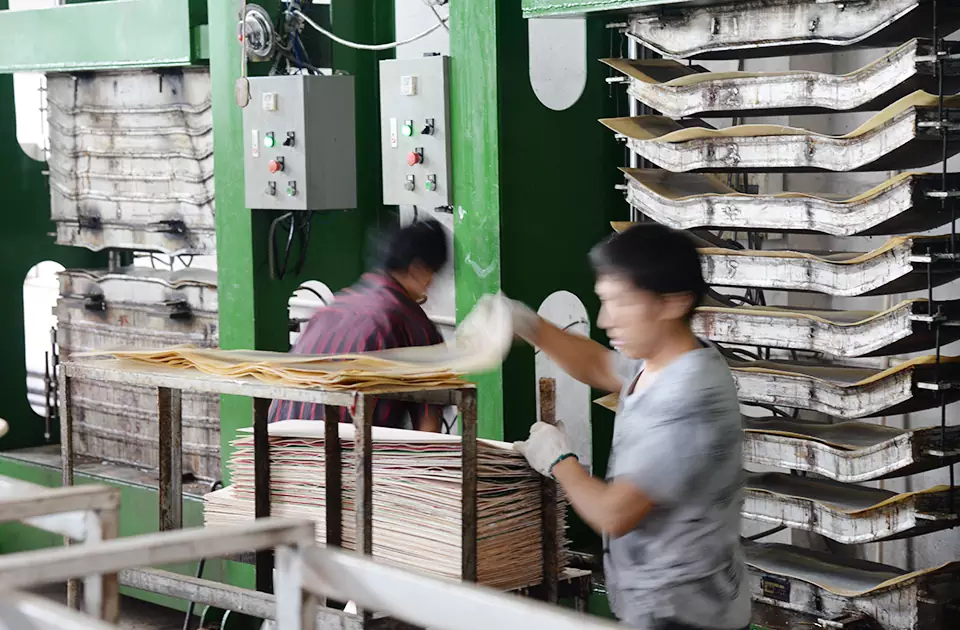
Brand buyers sourcing OEM or ODM skateboard decks often start with a graphic and a shape. Those matter, but the construction choices underneath — material, ply count, pressing method, and finish — are what determine how the board feels, how it holds up, and how clearly you can brief a factory. This article walks through the decisions we discuss most often with overseas brand partners, based on how we build decks at our factory in Foshan.
Start with the riding program, then the construction
Before choosing maple or bamboo, be clear about the category: street and park skateboards, cruisers, dancing or distance longboards, downhill, and similar programs. The intended use tells you what you need from stiffness, weight, and pop. Share that context with the factory along with size, shape, and target volume. Construction can then be specified to match the program rather than copied from a generic template.
100% Canadian maple or bamboo
Vuelo builds decks in 100% Canadian maple or in bamboo. Maple is the familiar choice for many skateboard and longboard programs: a consistent veneer that brands and riders already know. Bamboo is an option when a program calls for a different weight or flex character, or when the brand wants that material as part of its story.
Neither material is automatically better. The right choice depends on the category, the feel you want, and how the deck will be finished and ridden. If you are unsure, send the category and a reference board; we can discuss which material suits the program.
Ply count is customizable
Ply count is not fixed. It is specified per program. A thinner or thicker layup changes stiffness, weight, and the overall ride, so it should be decided together with the shape and material, not assumed. When you request a quote, say whether you already have a ply count in mind or whether you want a recommendation for the category.
Cold press and hot press
We offer both cold press and hot press. Both are established ways to laminate veneers and set the shape of a deck. Which method fits a given order depends on the construction, the shape, and the result you want from the board.
You do not need to arrive with a full process specification. It helps to say if you have a preference, or if a current board in your line was built one way and you want to stay consistent. We can confirm the pressing method when we review the project.
Glue, sanding, and varnish
The bond between plies matters as much as the wood. We use glue from Japan and Germany. After pressing, decks are hand sanded, then finished with an environmentally friendly varnish. These steps affect how graphics sit on the board and how the surface feels in the hand and underfoot. If your brand has a particular edge, grip, or clear-coat expectation, include it in the brief.
Decks only, or completes
Orders can be decks only or completes. Many brand partners ship a deck program first and source trucks, wheels, and hardware separately. Others prefer a complete so the board is ready to pack and sell under their label. Tell us which you need when you inquire; packing can be planned around either.
A brief that helps the factory quote accurately
A useful first inquiry usually includes:
- Category and intended use
- Size and shape, or a reference board
- Maple or bamboo, if you have a preference
- Ply count, or a request for a recommendation
- Cold press or hot press, if you have a preference
- Graphics and finish notes
- Decks only or completes
- Target quantity and destination
MOQ, lead time, and pricing are confirmed directly for each project. We do not publish fixed figures here because they depend on the construction and volume you need.
If you are planning a new skateboard or longboard line, contact Vuelo with the points above. We will review feasibility and come back with next steps.
Start an OEM conversation
Send your category, construction preferences, and target volume. Or message us on WhatsApp.